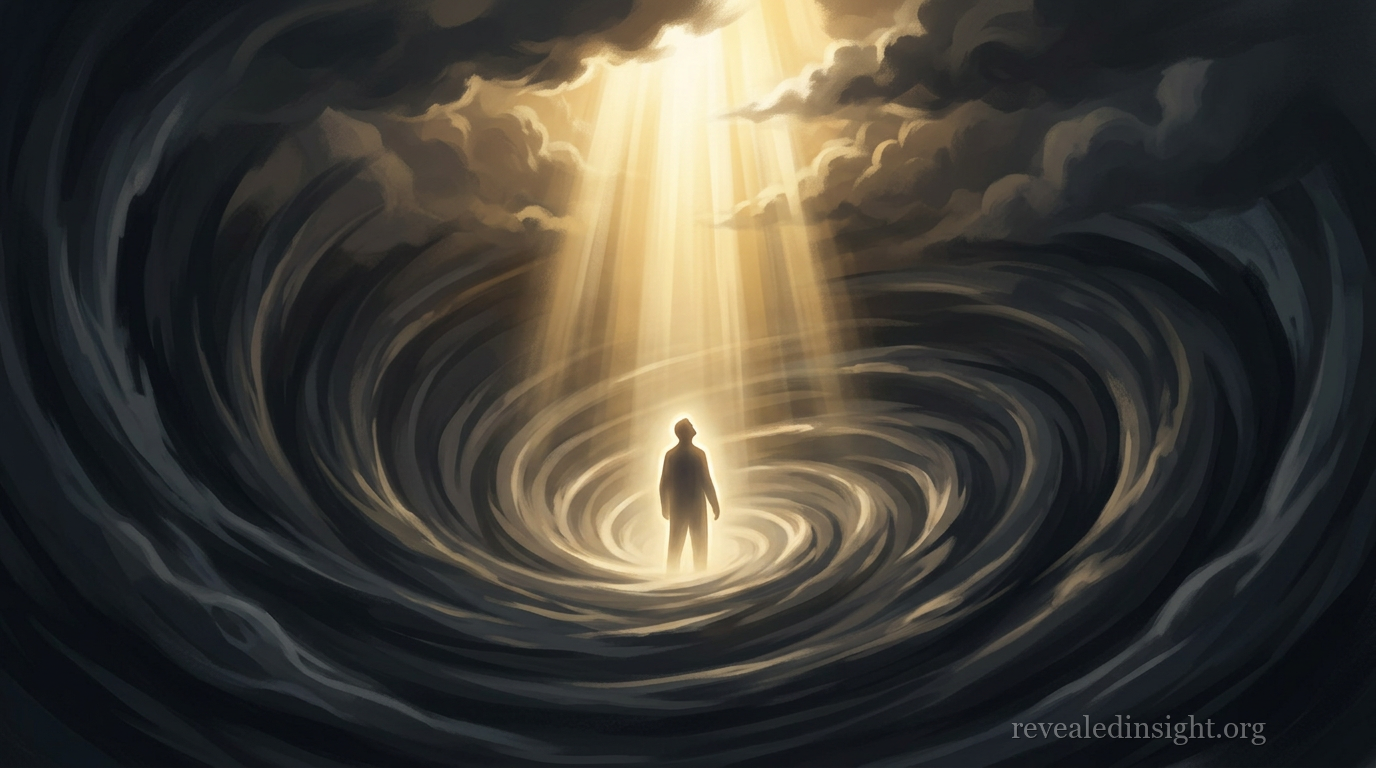
The Cycles of Torment: Understanding God's Sovereign Authority Over Adversity and Evil
God is not absent from your suffering — He is the supreme authority over it.
Adversity does not always come from sin, witchcraft, or the enemy's unchecked power. God is the supreme authority over all things — including calamity, torment, and evil — and He uses cycles of difficulty to refine, discipline, and ultimately accomplish His eternal purposes in the lives of believers. Understanding this truth dismantles false theology and repositions the believer to worship God even in the darkest seasons.
Teaching Overview
- God uses cycles of torment — beginning with sin, followed by divine discipline — to accomplish His sovereign purposes in the lives of believers.
- Humility is the gateway to grace; what cannot be received through prayer must be received through submission to those God has appointed.
- God is the supreme authority over all things, including evil and calamity, and takes direct credit for both prosperity and adversity.
- The difference between testing and temptation reveals God's intentional design — weakness is preserved in the believer so that dependence on God remains.
- Cycles of stagnancy and difficulty are often not the work of witchcraft but God's sovereign hand holding a believer in place until the heart is circumcised.
Grace, Humility, and the Art of Receiving
- Grace is not obtained through prayer — it is obtained through humility.
- God withholds certain gifts from individuals intentionally so that they must humble themselves to receive from those He has graced with what they lack.
- Jesus himself, though fully God, had to humble himself before John the Baptist to receive the grace of an open heaven — because that gateway belonged to the spirit of Elijah.
"Grace comes through humility. God gives grace to the humble. If you're not humble, you don't receive grace. Greatness comes by lowering yourself. Grace doesn't come by prayer. Grace comes by humbling yourself."
The First Cycle of Torment: Sin
- Before receiving Christ, every person is trapped in a cycle of torment under the prince of the power of the air, who exploits humanity's disobedience to wage war against God.
- God forgives mankind because humanity did not originate sin — we fell victim to it.
- When a believer enters Christ, the bondage of sin is immediately broken because the torment that was owed to the sinner fell entirely on Jesus Christ of Nazareth.
"Not saying that the cycle stopped, the cycle continued in Christ but we escaped it."
The Second Cycle of Torment: God's Discipline
- God himself can give a believer over to Satan — not for destruction of the soul, but for the salvation of it.
- God's greatest concern is not earthly comfort but eternal salvation; He will permit the destruction of the body to preserve the soul.
- Jesus himself was given up — surrendered — because no one could kill him unless he allowed it; his own death was a deliberate act of divine will.
"God would rather save their soul because he knows what is to come. These people will backslide, they will walk away. So God will give them up to Satan for the destruction of their body but the salvation of their soul."
Testing Versus Temptation
- Testing is God's instrument of promotion — He tests a believer on what they have learned in order to advance them to the next dimension.
- Temptation is the devil's instrument — designed to surface the hidden evil within a person, because a believer is tempted by their own evil desires.
- God will never allow a believer to be tempted beyond their capacity, because the truth they carry is meant to be the cleansing of the weakness within them.
"God never tempts you. God tests you to promote you."
The Purpose of Weakness
- God will not deliver a believer from every weakness — weakness is preserved deliberately so that dependence on God is maintained.
- Self-righteousness begins the moment a person believes they have conquered their weaknesses in their own strength.
- The power of God rests only on those who are conscious of their weakness, because consciousness of weakness produces clinging to God.
"I will glory in my weakness so that the power of Christ may rest on me. The power of God only rests on you if you know you're weak. Because when you're conscious of your weakness, then you hold on to God."
God's Sovereignty Over Calamity
- God explicitly takes credit for both prosperity and calamity — He is the author of both light and darkness, good and adversity.
- If the devil could operate outside of God's jurisdiction, God would not be the supreme authority — but God is the supreme authority, meaning even the devil operates within His control.
- Every evil that comes to pass does so because God permitted or ordained it; nothing falls outside His sovereign will.
"I form the light and create darkness. I bring prosperity and create calamity. I the Lord do all these things."
"If the devil can do something that can function outside of God's will, then God is not powerful. But if God is in control, it means he's even in control of the devil."
God's Authority Over Curses and Evil
- A curse without a cause cannot stand — if a curse comes to pass, it is because God permitted it, not because of the power of the one who cursed.
- Attributing adversity to witchcraft before examining what God is doing reveals a fundamental misunderstanding of divine sovereignty.
- God can use an evil agent — even a lying spirit — to accomplish His specific will, as demonstrated in the case of Ahab and the lying spirit in the mouths of his prophets.
"A curse without a cause cannot stand. If a witch in the village curses you and it comes to pass, you offended God. Because if there is no cause, their curse cannot work."
Cycles of Stagnancy as Divine Discipline
- When God places a believer in a cycle of stagnancy or torment, fasting, prayer, and anointing oil will not break it — because it is God's hand, not the enemy's.
- God put the children of Israel in a forty-year cycle of torment around the same mountain until their hearts were ready; He does the same with believers who are not yet prepared for promotion.
- What God is looking for in these seasons is not religious performance but the circumcision of the heart — a genuine, inward recognition of where one is missing it.
"Some of you, your limitations, your stagnancy is because God has put you in a cycle of torment until you learn, because if he promotes you now, you will self-destruct and destroy a lot of people."
The Evil Spirit From the Lord: Saul and Judas
- The evil spirit that tormented Saul did not come from Satan — the Bible identifies it explicitly as an evil spirit from the Lord, revealing that God personally directed and permitted that torment.
- The sign of demonic torment is the absence of peace and rest — because demons themselves have no rest.
- Judas did not betray Jesus out of pure personal hatred; the demon did not enter him until Jesus himself gave the word — meaning Jesus orchestrated his own arrest, death, and resurrection.
"God is taking credit for the torment that is falling upon Saul."
"That demon never entered him until Jesus said, 'Now enter him.'"
Key Definitions
Cycle of Torment — A season or prolonged period of adversity, stagnancy, or suffering that God either permits or directly orchestrates for the purpose of refinement, discipline, or the fulfilment of His sovereign will.
Testing — God's instrument of promotion; a process through which God examines whether a believer has learned a spiritual lesson, in order to advance them to a greater dimension.
Temptation — The devil's instrument, designed to surface hidden evil within a person; it never exceeds a believer's capacity because the truth they hold is meant to be its cleansing agent.
Grace — Divine enablement that flows not through prayer but through humility; it is received by lowering oneself before those whom God has specifically graced with what another person lacks.
Self-Righteousness — The spiritual condition of crediting oneself for the absence of certain sins, measured by one's own standard rather than God's, resulting in the condemnation of others whose weaknesses differ from one's own.
Supreme Authority — The theological principle that God's power is absolute and universal — meaning no agent, including the devil, can operate, tempt, curse, or torment outside of God's knowledge, permission, and ultimate purpose.
Key Takeaways
- The first cycle of torment is broken the moment a believer enters Christ — because what was owed to the sinner fell on Jesus, and the power of the prince of the air over the repentant believer is immediately broken.
- God himself initiates the second cycle of torment — understanding that adversity sometimes comes directly from God's sovereign discipline transforms how a believer responds to suffering.
- Humility is the only pathway to grace — what cannot be obtained through prayer must be obtained by submitting to those God has graced with what you lack, as even Jesus demonstrated with John the Baptist.
- Weakness is not a spiritual failure — it is a divine design — God deliberately preserves weakness in believers so that dependence on Him remains the posture of the heart.
- Cycles of stagnancy are often God's doing, not the enemy's — believers who are trapped in repetitive limitation must first ask what God is building in them before attributing their condition to witchcraft or spiritual attack.
Reflection Questions
- When adversity or stagnancy comes into your life, is your first response to rebuke the enemy or to seek what God is doing — and what does that reveal about your theology of suffering?
- Is there someone in your life whom God has positioned as an "Elijah" — someone you should be humbling yourself to receive from — whom you have resisted or overlooked?
- In what area of your life have you been pouring anointing oil, fasting, or praying for a breakthrough without asking whether God himself has ordained the limitation for a season?
- Where have you been crediting yourself for the sins you no longer commit, rather than crediting Jesus as your righteousness — and how has that affected the way you view others?
- If God is the supreme authority over calamity as well as blessing, what specific hardship in your life needs to be surrendered to Him in worship rather than warfare?
Scripture References
- Isaiah 45:7 — "I form the light, and create darkness: I make peace, and create evil: I the LORD do all these things." (KJV)
- Lamentations 3:37-38 — "Who is he that saith, and it cometh to pass, when the Lord commandeth it not? Out of the mouth of the most High proceedeth not evil and good?" (KJV)
- 1 Kings 22:19-23 — "And he said, Hear thou therefore the word of the LORD: I saw the LORD sitting on his throne, and all the host of heaven standing by him on his right hand and on his left. And the LORD said, Who shall persuade Ahab, that he may go up and fall at Ramothgilead? And one said on this manner, and another said on that manner. And there came forth a spirit, and stood before the LORD, and said, I will persuade him. And the LORD said unto him, Wherewith? And he said, I will go forth, and I will be a lying spirit in the mouth of all his prophets. And he said, Thou shalt persuade him, and prevail also: go forth, and do so. Now therefore, behold, the LORD hath put a lying spirit in the mouth of all these thy prophets, and the LORD hath spoken evil concerning thee." (KJV)
- 1 Samuel 16:14
- Job 2:9-10 — "Then said his wife unto him, Dost thou still retain thine integrity? curse God, and die. But he said unto her, Thou speakest as one of the foolish women speaketh. What? shall we receive good at the hand of God, and shall we not receive evil? In all this did not Job sin with his lips." (KJV)
- 1 Corinthians 5:5
- 2 Corinthians 12:9 — "And he said unto me, My grace is sufficient for thee: for my strength is made perfect in weakness. Most gladly therefore will I rather glory in my infirmities, that the power of Christ may rest upon me." (KJV)
Golden Nuggets
"A prophet's duty is for you to see God beyond the scripture. A prophet's duty is to manifest God to you. The God that you read about, you're supposed to see Him."
"Grace comes through humility. God gives grace to the humble. If you're not humble, you don't receive grace. Greatness comes by lowering yourself. Grace doesn't come by prayer. Grace comes by humbling yourself."
"You can't pray for what God didn't give you. There are things you absolutely cannot pray for. You just have to humble yourself enough to be able to receive it."
"God will never deliver you from your weaknesses. He will not. He did that on purpose because if you have no weakness, then He has no place to stay in you."
"Just because you are confused about his actions, it doesn't mean he's confused about his actions. Just because you don't know how he moves doesn't mean it is confusion. No, you are confused because you don't know him."
"A curse without a cause cannot stand. If a witch in the village curses you and it comes to pass, you offended God. Because if there is no cause, their curse cannot work."
"Shall I only accept good from God and not evil? You can't just accept when he's doing good. You should also accept when he's doing evil."
"Following God has ups and downs because God is building up our spiritual life. We are being built. We have not arrived yet."
"God is taking credit for calamity. If the devil can do something that can function outside of God's will, then God is not powerful."
"The concept of salvation is this — you are bad. You will always be bad. You need Jesus in order for God to accept you. That is the gospel. The moment you think you're good, it's no longer the gospel. That is your gospel."
Resources and Further Reading
Read the Medium version of this article: [Medium link placeholder]
Free resources related to this teaching will appear here.
Related Teachings
Share this teaching